
RGN Trailer: Uses, Dimensions, Loading, and Transport Planning
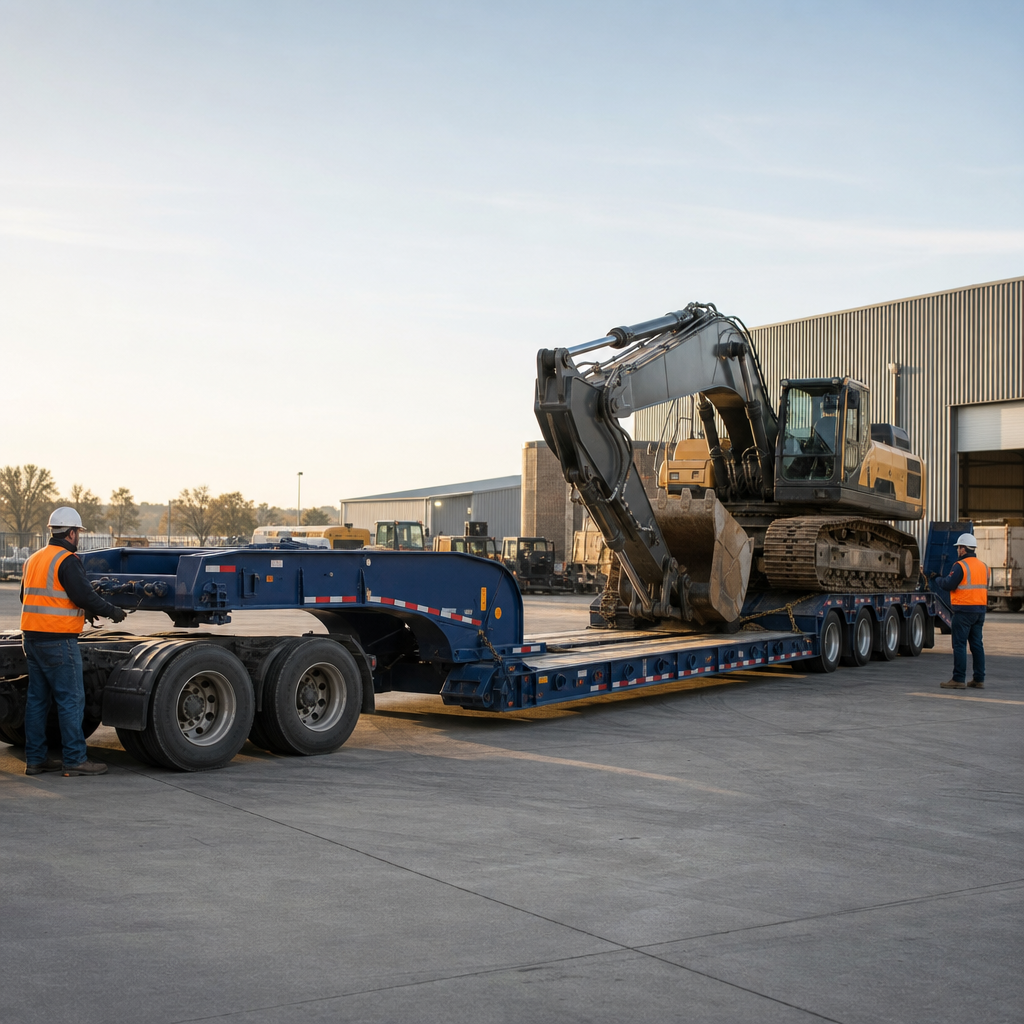
An RGN trailer, or removable gooseneck trailer, is a low-deck heavy-haul semitrailer designed to move tall, heavy, oversized, and self-propelled equipment. Its detachable front section lowers the main deck to ground level, allowing excavators, dozers, cranes, and other machinery to drive directly onto the trailer without a loading dock or separate ramp.
This trailer is commonly used for heavy equipment transport because its low deck height provides greater vertical clearance than a standard flatbed. This guide explains how RGN trailers work, when to use one, typical dimensions and capacities, cargo securement requirements, oversize load permits, and the planning steps needed for a safe heavy-haul shipment. It also clarifies why movie-related searches such as “RGN official trailer” may not lead to transportation information.
What Is an RGN Trailer?
An RGN trailer is a heavy-haul semitrailer whose gooseneck disconnects from the main deck. Once detached, the trailer’s front deck lowers to the ground and forms a ramp. Self-propelled machinery can then be driven directly onto the trailer without a crane, forklift, loading dock, or separate portable ramp. After the cargo is positioned and secured, the gooseneck reconnects to the tractor for transport.
The design is especially useful for freight that is too tall for a standard flatbed. Because the main deck sits close to the road, an RGN can provide more vertical clearance while helping the shipment remain within legal or permitted height limits. The terms lowboy trailer and low-bed trailer are sometimes used for similar equipment, but RGN specifically describes a low-deck trailer with a removable front connection. Businesses evaluating trailer selection and carrier readiness can review Heavy Haul Transportation Planning The Mistakes That Cause Delays Before Freight Moves.
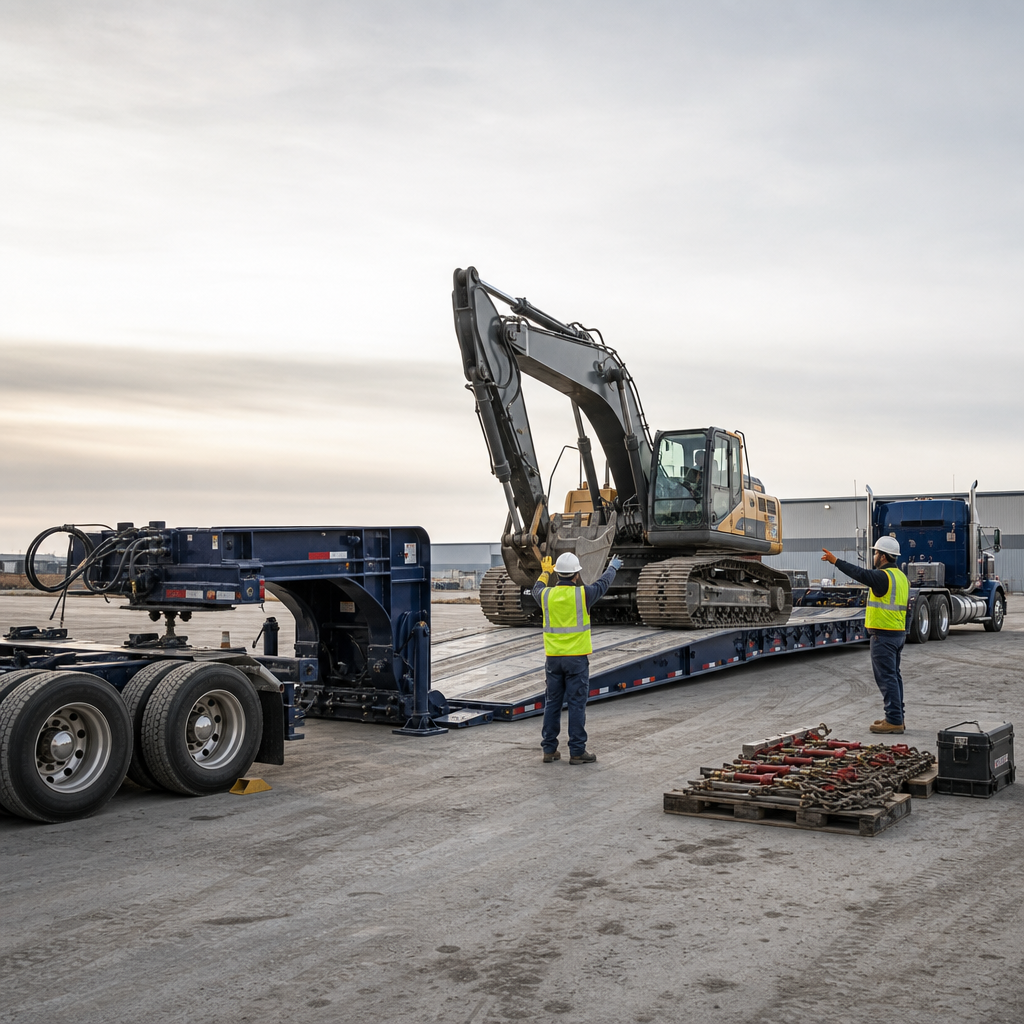
An RGN differs from a fixed-neck lowboy because the removable gooseneck creates ground-level loading access. This feature is valuable when a machine can move under its own power but is too large or heavy to load safely from the side. Some RGN configurations also support non-operable equipment when a winch, recovery vehicle, crane, or other controlled loading method is available.
In entertainment searches, the word “trailer” means a promotional video. Queries such as RGN official trailer, RGN movie teaser, RGN movie release date, or RGN film cast therefore have different intent. This article concerns transportation equipment rather than an RGN movie trailer review.
How an RGN Trailer Works
For loading, the driver parks on firm, level ground, disconnects the gooseneck, and pulls the tractor forward. The front of the deck is lowered to the ground, creating an incline over which tracked or wheeled equipment can move. Once the machine is correctly positioned, the tractor backs into place, reconnects to the gooseneck, and raises the deck into transport position.
RGNs may use hydraulic or mechanical systems. A hydraulic detachable gooseneck generally makes attachment, detachment, and deck-height adjustment more efficient, while a mechanical design may require more manual setup. Some configurations also include additional axles, removable outriggers, a detachable rear section, or deck extensions for unusually wide or long cargo.
Operational principle: The right trailer does more than support the cargo’s total weight. It must distribute that weight correctly across the tractor and trailer axles while maintaining safe clearance throughout the route.
Loading procedures should account for the equipment’s center of gravity, track or tire placement, ground clearance, operating condition, and designated attachment points. Weight must be positioned so the tractor’s steer and drive axles and the trailer axle groups remain within applicable limits. Poor placement can overload an axle even when the cargo’s total weight is below the trailer’s stated capacity.
Track orientation and concentrated weight also matter. Blocking, dunnage, cribbing, mats, or protective material may be needed to spread pressure and protect the deck. The carrier should confirm that ramps and deck surfaces can support the machine as it transitions from the ground to the trailer. The Federal Motor Carrier Safety Administration cargo securement rules provide federal requirements for preventing cargo from shifting, rolling, tipping, or falling during transit.
RGN Trailer Dimensions and Capacity
Exact RGN trailer dimensions depend on the manufacturer, axle count, well length, deck design, and specialized configuration. A common standard RGN has a well approximately 29 feet long, 8.5 feet wide, and 18 to 24 inches high. Capacity may start near 40 tons and increase substantially with multi-axle configurations, but advertised capacity should never be treated as the legal payload for every route.
SpecificationCommon RangePlanning ImpactMain well lengthApproximately 26–30 feetDetermines whether the equipment footprint fits the lower deck.Deck widthTypically 8.5 feetWider cargo may require permits, escorts, or flags and signage.Deck heightApproximately 18–24 inchesHelps reduce the shipment’s overall loaded height.Standard capacityOften 40–50 tonsActual legal capacity depends on axle loading and jurisdiction.AxlesThree or moreAdditional axles can distribute heavier loads more effectively.
These figures are planning references, not universal limits. Trailer capacity depends on the specific axle configuration, axle spacing, tractor weight, trailer tare weight, cargo position, state law, bridge restrictions, and permit conditions. A longer or heavier trailer may offer greater structural capacity while also reducing the payload available before the combination reaches a regulated gross weight.
Federal weight rules include the bridge formula explained by the Federal Highway Administration, while states establish their own permit conditions. A carrier must verify the exact trailer specification and legal axle distribution for each shipment rather than relying on a generic capacity chart.
Loaded height is calculated from the road surface to the cargo’s highest fixed point. The machine’s published height may not reflect attachments, exhaust stacks, operator cabs, folded booms, antennas, packaging, or transport supports. Likewise, overall width must include tracks, tires, axles, mirrors, blades, buckets, and any approved outriggers. Accurate measurements help determine whether the load is legal-size or requires an oversize load permit.
When to Use an RGN Trailer
An RGN is generally appropriate when cargo is self-propelled, unusually tall, difficult to lift, or too heavy for standard open-deck equipment. Common shipments include construction machinery, agricultural equipment, industrial components, mining equipment, and large generators. Ground-level loading can reduce dependence on facility equipment, but the pickup and delivery sites must still have sufficient space and stable ground for safe loading operations.
Excavators, bulldozers, loaders, and motor graders
Crushers, pavers, trenchers, and drilling equipment
Combines, tractors, and other large agricultural machines
Cranes, forklifts, and material-handling equipment
Industrial vessels, transformers, and manufacturing machinery
A step deck may be more economical when freight can be loaded by crane or forklift and does not require ground-level access. A standard flatbed may suit legal-height cargo with straightforward loading requirements. Double-drop trailers can provide a low center deck for tall freight, while specialized extendable or multi-axle equipment may be necessary for exceptional length or weight. Trailer choice should be based on the cargo footprint, loaded height, loading method, route, and legal axle loading—not equipment availability alone.
Pro Tip: Measure the cargo in transport-ready condition. Include buckets, blades, exhaust stacks, attachments, packaging, blocking, and any overhang rather than relying only on the manufacturer’s published dimensions.
Operability must also be confirmed before dispatch. If a machine will not start, steer, brake, or travel under its own power, the carrier may need a winch, crane, forklift, recovery equipment, or a different loading plan. Undisclosed non-operability can create delays, safety risks, detention, and additional charges. For a detailed equipment preparation checklist, review Construction Equipment Shipping How To Move Heavy Machinery Safely And Efficiently.
Unsure which trailer configuration fits the load? Request a customized logistics assessment from Sparrow Logistics to review equipment requirements, routing constraints, loading conditions, and scheduling needs before dispatch.
Planning a Safe and Reliable RGN Shipment
Successful RGN transportation starts with complete cargo information. Provide the exact length, width, height, weight, pickup and delivery addresses, operating condition, loading dates, and loading assistance available at each facility. Recent photos, equipment diagrams, serial-number specifications, and a clear description of removable attachments can help identify clearance or securement issues before a truck arrives.
The planning process should address:
Trailer capacity and usable deck space
Axle weight distribution and cargo center of gravity
Oversize or overweight permits
Bridge, utility, tunnel, and overhead clearance
Escort vehicle or pilot car requirements
Commodity-specific load securement
Site access, ground conditions, and appointment restrictions
Weather, road construction, curfews, and seasonal travel limits
Permit requirements are based on the loaded vehicle, not just the machine. A legal-size piece of equipment can become overwidth or overweight after trailer dimensions and axle weights are considered. Conversely, removing a bucket, blade, counterweight, or other attachment may reduce dimensions enough to simplify permitting. Those parts must then be transported and secured properly, either on the same permitted combination or as separate freight.
Route surveys may be needed for unusually tall, wide, long, or heavy loads. The planned route must account for bridge ratings, lane width, railroad crossings, work zones, low clearances, tight turns, steep grades, roadway shoulders, and local restrictions. Permit authorities may assign a route that differs from the shortest commercial route, and travel may be limited to daylight hours or restricted on weekends and holidays.
The FMCSA size and weight resources explain the federal framework, while the Electronic Code of Federal Regulations, Part 393 covers cargo securement and commercial vehicle requirements. Permits must still be checked with every state or jurisdiction along the planned route.
Load securement should use chains, binders, straps, blocking, or other devices rated for the cargo and applied at appropriate attachment points. Articulating components such as booms, buckets, blades, and counterweights may require independent restraint. Securement should be inspected before departure and rechecked as required during transit, particularly after the cargo settles or the vehicle encounters rough road conditions.
Communication is equally important. Shippers, site contacts, drivers, permit teams, and escort providers should work from the same cargo specifications and schedule. Written confirmation reduces the risk of sending an unsuitable trailer, arriving before permits are active, or discovering that the site cannot accommodate the truck. The article Freight Execution Best Practices How Better Planning Leads To Better Deliveries explains how shared information and early coordination improve delivery performance.
Pickup and delivery access should be evaluated before the appointment. An RGN combination needs room for the tractor to pull away from the detached deck and reconnect after loading. Soft soil, steep slopes, overhead wires, narrow gates, parked vehicles, and active jobsite traffic can interfere with the process. Establishing a designated loading area and confirming who is authorized to operate the equipment can prevent avoidable delays.
Timing also affects execution. Permit processing, pilot-car availability, weather, construction schedules, and limited travel windows may add lead time. Building contingency time into the plan is particularly important during peak construction periods or when the load crosses several states. Shippers can use How To Reduce Freight Delays Before They Disrupt Operations to identify preventable scheduling risks before freight moves.
Conclusion
An RGN trailer provides ground-level loading, a low main deck, and configurable axle capacity for demanding heavy-haul freight. It is often the practical choice for tall machinery and self-propelled equipment that cannot be loaded efficiently onto a conventional flatbed, step deck, or fixed-neck lowboy.
Reliable execution depends on selecting the correct configuration, verifying transport-ready dimensions and weight, planning load securement, obtaining permits, checking the route, and coordinating every party involved. Contact Sparrow Logistics for a customized transportation assessment focused on improving shipment reliability, efficiency, and heavy-haul planning.
Frequently Asked Questions
What does RGN trailer stand for?
RGN stands for removable gooseneck. The trailer’s front connection detaches so the main deck can lower to the ground for equipment loading.
What is an RGN trailer used for?
An RGN trailer transports heavy, tall, oversized, or self-propelled equipment. Typical cargo includes excavators, dozers, cranes, agricultural machinery, mining equipment, and industrial components.
How is equipment loaded onto an RGN trailer?
The driver removes the gooseneck and lowers the front of the trailer deck. Operable machinery can then be driven onto the deck before the gooseneck is reconnected. Non-operable cargo may require a winch, crane, or other controlled loading equipment.
How much weight can an RGN trailer carry?
A standard RGN may carry approximately 40 to 50 tons, while specialized multi-axle models can handle more. Legal capacity depends on the trailer, tractor, axle spacing, cargo placement, permits, and route.
What is the typical deck height of an RGN trailer?
The main well is commonly about 18 to 24 inches above the road. This low deck helps accommodate taller freight while managing overall loaded height.
Does every RGN shipment require an oversize permit?
No. Permits are generally required only when loaded dimensions or weight exceed applicable legal limits. Requirements vary by state and route, so each shipment must be evaluated individually.
What is the difference between an RGN and a lowboy trailer?
Lowboy is a broad term for a trailer with a low deck, while an RGN specifically has a removable gooseneck. The detachable design provides ground-level loading for self-propelled equipment.
What information is needed for an RGN freight quote?
Provide the cargo’s exact transport-ready dimensions, weight, pickup and delivery locations, operating condition, loading dates, and photos. Attachment details, loading assistance, and site-access restrictions should also be disclosed.
Recommended Reading
Explore the Sparrow Logistics Blog for additional freight planning, carrier coordination, and transportation guidance.
Why Heavy Haul Transportation Planning Fails Before The Load Moves
Transportation Planning Mistakes 7 Common Errors That Disrupt Freight Operations